
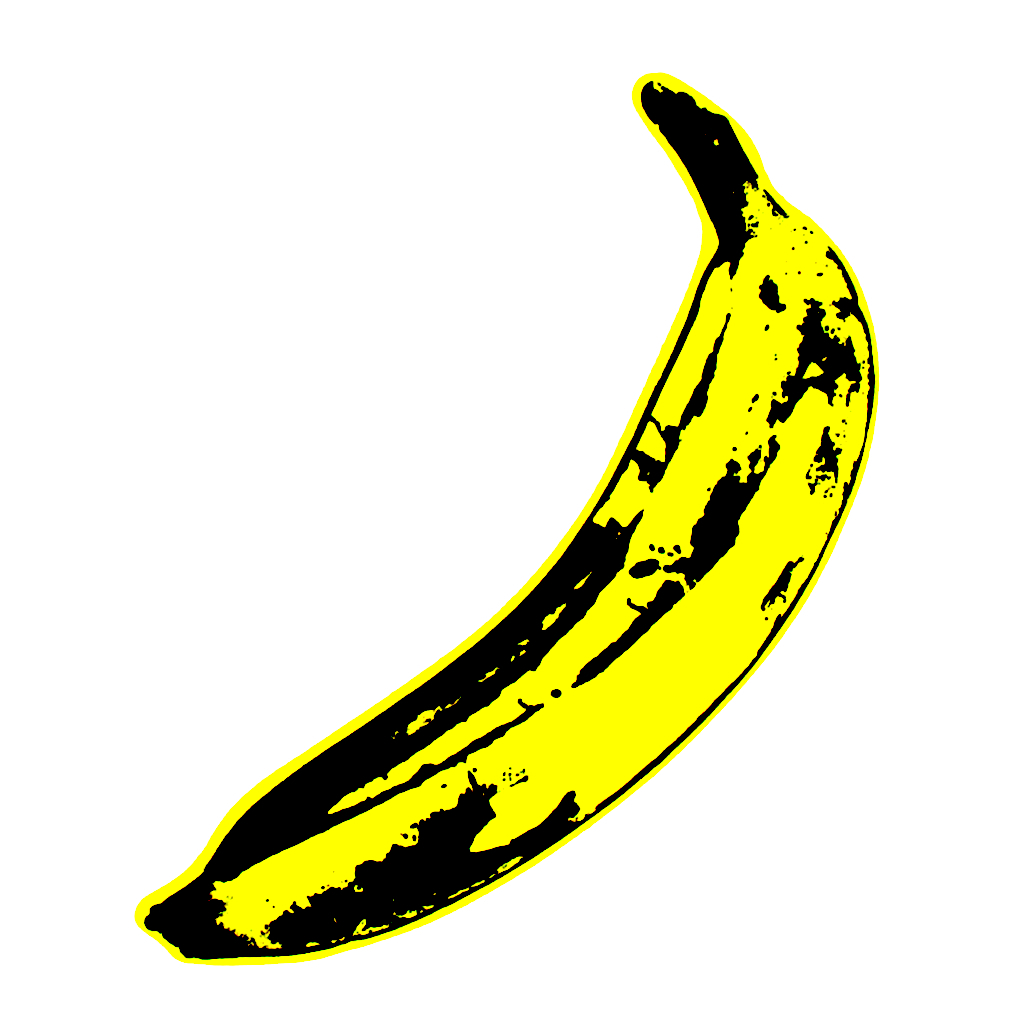

Released in March 1967, *The Velvet Underground & Nico* is the debut album by the American band The Velvet Underground. Published by Verve Records and produced by Andy Warhol, it features Lou Reed, John Cale, Sterling Morrison, Maureen Tucker, and singer Nico. The album is now considered one of the foundational records of alternative and experimental rock, despite limited commercial success upon its release.
In the mid-1960s, New York City was a hotbed of artistic avant-garde, where music, visual arts, experimental film, and performance art converged. Unlike the Californian rock scene, dominated by psychedelia, The Velvet Underground emerged from an urban environment marked by social realism, provocation, and formal experimentation.
Andy Warhol played a central role in the album's conception and distribution. As manager and producer, he provided the band with significant artistic and media exposure. He also insisted on Nico's presence on certain tracks. The original cover, depicting a stylized banana, became one of the most famous in rock history.
Nico, whose real name was Christa Päffgen, was a German singer and model associated with Warhol's Factory. Her deep, detached voice contrasted sharply with Lou Reed's and contributed to the album's unique identity.
Nico notably performed "All Tomorrow's Parties," "Femme Fatale," "I'll Be Your Mirror," and "Sunday Morning" as backing vocalists. These tracks brought a melancholic and distant dimension that reinforced the album's dark atmosphere.
The album is distinguished by its use of drones, distortion, repetitive structures, and minimalist rhythms. John Cale, trained in contemporary music, introduced influences from La Monte Young and the European avant-garde, notably on "Venus in Furs" and "Heroin."
Musically, The Velvet Underground & Nico broke with the rock standards of the time. They blended garage rock, experimental music, urban folk, and art rock, paving the way for more radical and introspective musical forms.
Tracks like "Heroin" directly address hard drug use, without moral judgment or explicit glorification. This realistic approach was unprecedented in popular music at the time.
The album also deals with non-normative sexuality, sadomasochism, and marginalized figures, particularly in "Venus in Furs." These themes contributed to the album's controversial reputation.
Lou Reed adopted a direct, almost journalistic style of writing, describing New York nightlife, its excesses, and its loneliness. This narrative had a lasting influence on subsequent rock songwriting.
Among the most notable tracks are "Sunday Morning," "Heroin," "Venus in Furs," "All Tomorrow's Parties," and "I'm Waiting for the Man." Each illustrates a different facet of the band's aesthetic, ranging from apparent gentleness to sonic radicalism.
Upon its release, the album met with limited commercial success and a mixed critical reception. Its content, considered provocative, and its experimental approach hindered its distribution. It did not rank among the best-selling albums of 1967.
Over time, The Velvet Underground & Nico became a major reference point for genres such as punk, post-punk, alternative rock, and indie rock. Many artists cite the album as a defining influence.
The album regularly appears on lists of the greatest albums of all time compiled by the music press. It is now considered a seminal work, more influential than popular in its time.
Through its thematic audacity, musical innovations, and rejection of commercial conventions, The Velvet Underground & Nico redefined the possibilities of rock. Its cult status rests on its profound and lasting influence, as well as its ability to remain relevant decades after its release.