
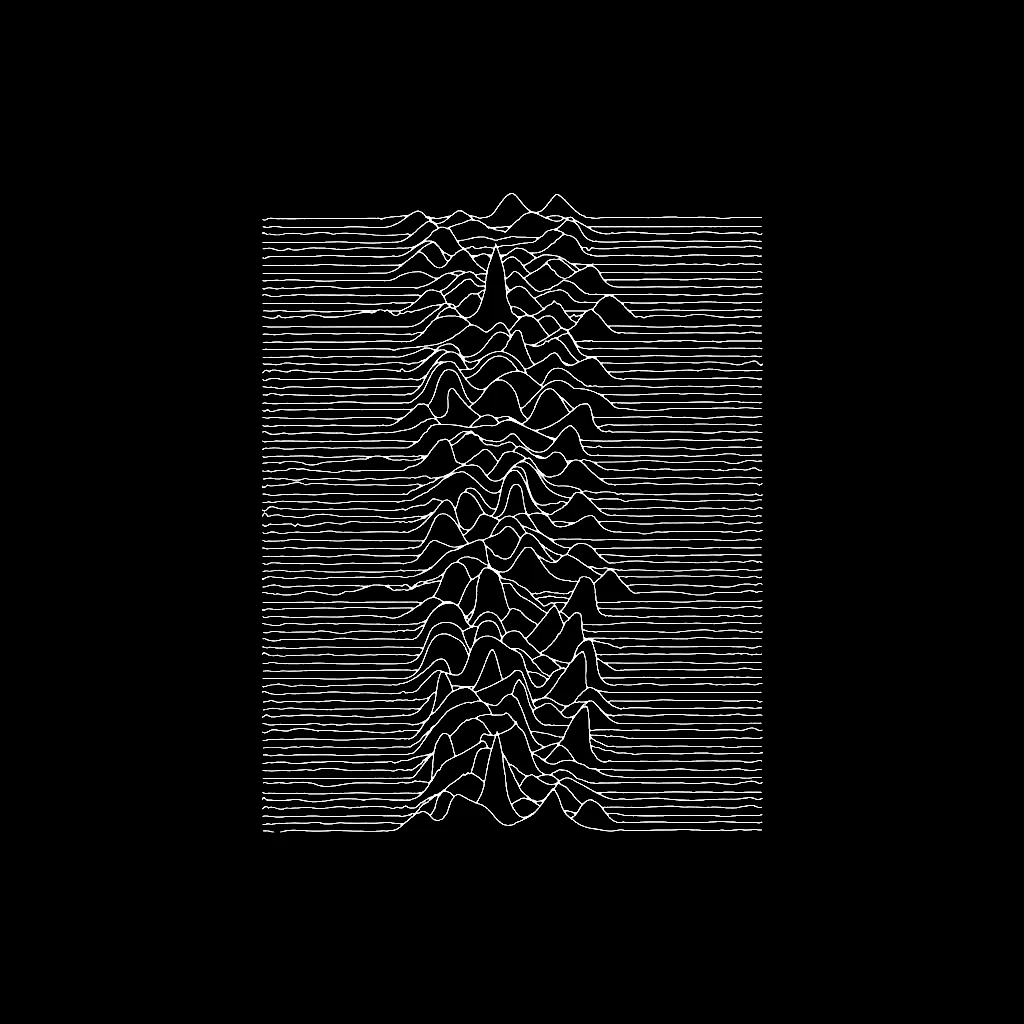

Released in June 1979, Unknown Pleasures is the debut studio album by the British band Joy Division. Published by Factory Records and produced by Martin Hannett, it established Joy Division as a major player in the post-punk scene. Featuring Ian Curtis, Bernard Sumner, Peter Hook, and Stephen Morris, the album is distinguished by its dark atmosphere, innovative sonic textures, and unprecedented emotional intensity.
In the late 1970s, punk was declining, giving way to a more experimental and introspective scene: post-punk. Joy Division emerged from Manchester with a cold, minimalist, and avant-garde aesthetic, contrasting sharply with the raw energy of punk.
England in the late 1970s was marked by economic crisis, unemployment, and youth disillusionment. These elements are reflected in the album's themes, which explore alienation, loneliness, and existential angst.
Producer Martin Hannett plays a key role in creating the album's distinctive sound. His studio techniques, such as reverb, delay, and bass and drum processing, lend an atmospheric depth to the band's minimalist compositions.
The album is characterized by original sonic textures, a unique sonic space, and a mix that highlights Peter Hook's melodic bass and Stephen Morris's precise drumming. This approach creates a unique emotional intensity.
Unknown Pleasures blends post-punk, cold wave, and experimental rock. Hypnotic bass lines, dissonant guitars, and repetitive rhythms define a distinctive and influential sound.
The album juxtaposes dark sounds and tense rhythmic structures, creating a contrast between melancholy, urgency, and a chilling atmosphere. This combination became a model for many subsequent bands.
Ian Curtis's lyrics explore marginality, isolation, and the difficulty of communicating, reflecting the personal and social anxieties of the time.
The album addresses psychological fragility and internal tension, illustrated by tracks like "Disorder" and "Insight," foreshadowing Curtis's tragic fate.
Some tracks, such as "Transmission" and "New Dawn Fades," question the difficulty of human relationships and the search for meaning in a hostile world.
Among the standout tracks are "Disorder," "Day of the Lords," "Candidate," "Insight," and "New Dawn Fades." Each element contributes to the album's thematic and sonic cohesion.
Upon its release, Unknown Pleasures received positive critical acclaim, praising its originality and depth, but its commercial success remained limited. The album gained recognition over time, particularly after Ian Curtis's posthumous fame.
The album had a lasting influence on post-punk, cold wave, alternative rock, and industrial music. Its production, atmosphere, and minimalist style inspired numerous artists and bands in subsequent decades.
Unknown Pleasures is regularly cited as an emblematic album of the late 1970s and a model of sonic and emotional cohesion. Its iconic cover art also contributes to its cult status.
Through its innovative production, dark and minimalist aesthetic, and intense lyrics, Unknown Pleasures redefined the codes of post-punk and inspired generations of artists. The album remains an essential reference point in the history of alternative music.